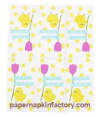
A child wipes frosting from her mouth with a bright red birthday napkin. A guest wraps a leftover cookie in a printed paper square and puts it in a pocket. These everyday actions involve direct contact between printed ink and food or skin. The ink type determines whether that contact poses any risk. from Papernapkinfactory, produced by Zhuji Furong Paper Products Co., Ltd., use water-based and vegetable-based inks certified for food contact. Yet many manufacturers still use cheaper alternatives. This situation raises a direct question for anyone hosting an event: what ink types are safe for direct contact with food on party printed paper napkins?
Water-based inks stand as the safest choice for napkins. These formulations use water as the primary solvent instead of chemical carriers. The ink dries through evaporation, leaving only pigment and a small amount of resin on the paper surface. Papernapkinfactory selects water-based inks that meet international food-contact standards. The complete drying process ensures no mobile substances remain to transfer onto skin or food.
Vegetable-based inks offer another safe alternative. These inks use renewable oils such as soybean or linseed oil as the pigment carrier. Natural oils reduce toxicity compared to petroleum-based solvents. Papernapkinfactory's vegetable ink options comply with FDA and EU food-contact regulations. The oils also enhance biodegradability, aligning with eco-conscious event planning.
Hydrocarbon resin inks without aromatic solvents provide a third safe category. These formulations exclude benzene, toluene, and other volatile organic compounds that pose health concerns. Papernapkinfactory employs hydrocarbon inks that meet the low-migration requirements for food packaging. A properly dried napkin printed with these inks transfers no measurable residue to food during normal use.
Solvent-based inks have no place on food-contact napkins. Traditional solvent inks contain toluene, xylene, or other aromatic hydrocarbons. These substances can migrate from the printed surface into food, especially when the napkin contacts warm or fatty foods. A napkin wrapped around a hot cookie or buttered bread creates conditions for chemical transfer. Papernapkinfactory never uses solvent inks on any party printed paper napkins.
Primary aromatic amines (PAAs) represent a specific chemical risk in some printed papers. PAAs form during the curing of certain azo pigments and can leach into food -4-9. The German Federal Institute for Risk Assessment classifies several PAAs as carcinogenic and recommends extremely low migration limits -4. Papernapkinfactory selects only pigments that release no detectable PAAs under standardized food simulant testing. Red, orange, and yellow napkins require particular attention to this risk -9.
Certification documentation provides buyer protection. A responsible party printed paper napkins manufacturer supplies ink safety certificates upon request. Papernapkinfactory maintains current certifications including FDA food-contact compliance and EU REACH compliance. The factory also tests finished napkins for PAA migration according to EN 14482 standards. A buyer who receives these documents confirms the napkins' suitability for food contact.
Printing technique influences ink safety as well. Flexographic printing applies a thin, uniform layer that dries completely before the napkin stacks. Gravure printing uses deeper ink wells and slower drying that might leave residual solvents. Papernapkinfactory employs high-speed flexographic presses with forced hot air drying. The printing line ensures that every napkin exits the press with fully cured, non-migratory ink.
Storage conditions affect cured ink stability. A napkin printed with food-safe ink remains safe through normal distribution cycles. Prolonged exposure to high heat or direct sunlight can degrade some pigments or resin systems. Papernapkinfactory packages napkins in moisture-barrier wraps that protect ink integrity. The factory recommends using printed napkins within two years of production for assured safety.
For any event planner selecting custom napkins, Party Printed Paper Napkins Manufacturer[/url] shows Papernapkinfactory's ink certifications and printing process, where FuRong's technicians specify water-based inks for every Party Printed Paper Napkins order. A napkin that touches food must carry only verified safe chemistry. A napkin that skips safety testing carries unknown risk. Does your supplier offer you complete ink transparency before you place your order?
Water-based inks stand as the safest choice for napkins. These formulations use water as the primary solvent instead of chemical carriers. The ink dries through evaporation, leaving only pigment and a small amount of resin on the paper surface. Papernapkinfactory selects water-based inks that meet international food-contact standards. The complete drying process ensures no mobile substances remain to transfer onto skin or food.
Vegetable-based inks offer another safe alternative. These inks use renewable oils such as soybean or linseed oil as the pigment carrier. Natural oils reduce toxicity compared to petroleum-based solvents. Papernapkinfactory's vegetable ink options comply with FDA and EU food-contact regulations. The oils also enhance biodegradability, aligning with eco-conscious event planning.
Hydrocarbon resin inks without aromatic solvents provide a third safe category. These formulations exclude benzene, toluene, and other volatile organic compounds that pose health concerns. Papernapkinfactory employs hydrocarbon inks that meet the low-migration requirements for food packaging. A properly dried napkin printed with these inks transfers no measurable residue to food during normal use.
Solvent-based inks have no place on food-contact napkins. Traditional solvent inks contain toluene, xylene, or other aromatic hydrocarbons. These substances can migrate from the printed surface into food, especially when the napkin contacts warm or fatty foods. A napkin wrapped around a hot cookie or buttered bread creates conditions for chemical transfer. Papernapkinfactory never uses solvent inks on any party printed paper napkins.
Primary aromatic amines (PAAs) represent a specific chemical risk in some printed papers. PAAs form during the curing of certain azo pigments and can leach into food -4-9. The German Federal Institute for Risk Assessment classifies several PAAs as carcinogenic and recommends extremely low migration limits -4. Papernapkinfactory selects only pigments that release no detectable PAAs under standardized food simulant testing. Red, orange, and yellow napkins require particular attention to this risk -9.
Certification documentation provides buyer protection. A responsible party printed paper napkins manufacturer supplies ink safety certificates upon request. Papernapkinfactory maintains current certifications including FDA food-contact compliance and EU REACH compliance. The factory also tests finished napkins for PAA migration according to EN 14482 standards. A buyer who receives these documents confirms the napkins' suitability for food contact.
Printing technique influences ink safety as well. Flexographic printing applies a thin, uniform layer that dries completely before the napkin stacks. Gravure printing uses deeper ink wells and slower drying that might leave residual solvents. Papernapkinfactory employs high-speed flexographic presses with forced hot air drying. The printing line ensures that every napkin exits the press with fully cured, non-migratory ink.
Storage conditions affect cured ink stability. A napkin printed with food-safe ink remains safe through normal distribution cycles. Prolonged exposure to high heat or direct sunlight can degrade some pigments or resin systems. Papernapkinfactory packages napkins in moisture-barrier wraps that protect ink integrity. The factory recommends using printed napkins within two years of production for assured safety.
For any event planner selecting custom napkins, Party Printed Paper Napkins Manufacturer[/url] shows Papernapkinfactory's ink certifications and printing process, where FuRong's technicians specify water-based inks for every Party Printed Paper Napkins order. A napkin that touches food must carry only verified safe chemistry. A napkin that skips safety testing carries unknown risk. Does your supplier offer you complete ink transparency before you place your order?